Dr. Gymbro
←

#tart cherry juice

1 article
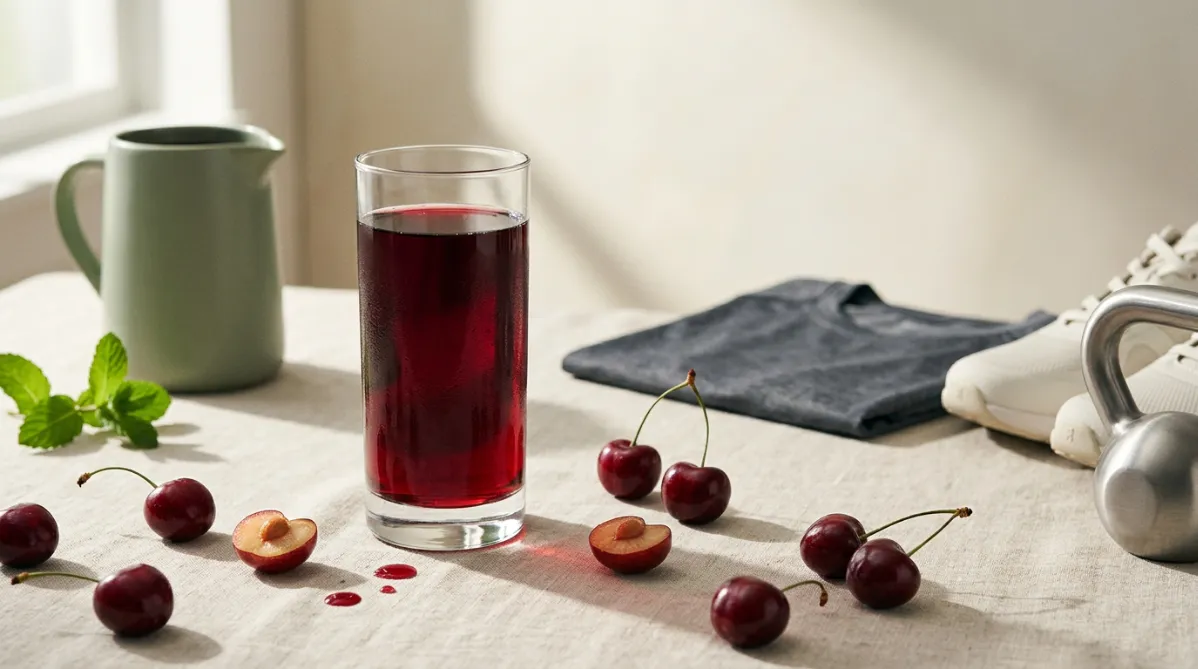
A wide, softly lit editorial still life on a pale oatmeal linen surface. In the center sits a tall, clear glass filled with deep garnet-red tart cherry juice, with condensation beading on the outside and a faint ruby glow where light passes through it. Around it are a scattering of fresh Montmorency cherries, some with stems and some halved to show pale amber flesh and a single pit. A few drops of juice have splashed onto the linen, leaving small crimson stains. To the right, slightly out of focus, lies a folded charcoal-gray running shirt, a pair of minimalist off-white running shoes, and a small brushed-steel kettlebell, suggesting both endurance and strength training without a gym in view. On the left, a ceramic pitcher in matte sage green holds more juice, and a sprig of fresh mint adds a small contrast.

Window light comes from the upper left, casting long, gentle shadows and creating a warm morning feel. The palette is restrained and modern: deep burgundy, cream, sage, and soft slate, with plenty of negative space in the upper right for headline text. The camera angle is a shallow three-quarter view from slightly above, with a shallow depth of field. The foreground cherries are razor sharp and the background melts into a creamy blur. Subtle film grain, natural color grading, and a clean, minimalist composition give it the polished feel of a contemporary health and science magazine. No text, no logos, no people, and no futuristic elements. The overall mood is calm, fresh, and restorative, hinting at recovery and balance.
recovery

Truco del jugo de cereza ácida: recuperación de fuerza más rápida y niveles de IL‑6 más bajos

BY DR. GYMBRO ·

Maratonistas y levantadores juran por el jugo de cereza ácida para recuperarse, y un estudio controlado con placebo lo puso a prueba. En 20 corredores, la fuerza isométrica se recuperó significativamente más rápido (P = 0.024), mientras que los niveles de IL‑6, CRP y ácido úrico descendieron y el estado antioxidante aumentó alrededor de un 10 %. Sin embargo, la creatina quinasa, LDH y el dolor muscular no cambiaron de forma significativa, lo que matiza las promesas publicitarias. Aquí explicamos qué hicieron, qué descubrieron y quién podría beneficiarse realmente.

This page is available in